If I’m being honest, it started with a haircut. I went back to a short hair cut last spring. In mid-July I was back in for another trim. My stylist got started and asked about my bald spot.
“What bald spot?”
It hadn’t been there at my cut eight weeks prior and I hadn’t noticed it on my own. She chatted about how she sees them sometimes. Often due to stress. She also sees the hair grow back. Throughout the appointment my mind raced. In the Lyft home I did some quick searches. It could be anxiety. It could be an autoimmune disorder. It could be hypothyroidism. As it would turn out, yes, yes, and yes. I had made the decision to stop my anxiety medication some months before; I wanted to see if that would allow me to better connect with my emotions (narrator: it did not). So while still in Lyft, I quickly made an appointment via one of those mental health apps to see a professional and go back on my beloved Lexapro. Step 1.
What I knew to be true was that I needed to see a doctor. I had not been to a primary care provider in years because, let’s be honest, medical care for fat people is awful. Research mode kicked in and I searched for weight neutral doctors. I tried Mary Lambert’s list. The few NYC-based doctors accepting new patients had wait times of at least six months. It was reddit that ultimately came through, of all things. I made a list of several doctors who people swore weren’t immediately fatphobic and started calling. This was late August, maybe? I got an appointment for October 23rd.
My anxiety was through the roof as a waited for my new SSRIs to kick in and as I waited for the appointment. Dr. L is, overall, a good provider. The office staff didn’t complain too much when I declined being weighed (you know you can do that, right?). She didn’t ask me about weight loss goals. She did mention that even losing a small amount of weight would lower cholesterol levels (turns out, once she actually had my lab work, she had to acknowledge that my levels are just fine). This appointment came with ALL the referrals. In my mid-40s, I was overdue for a lot of appointments.
The hair issue was solved rather easily. “Easily.” My dermatologist diagnosed alopecia areata, an autoimmune disorder. By the time I saw her in November I had a second bald spot and the first had grown. Both were resolved, over time, with many, many steroid injections into my scalp. No trace of them as I write. Though with alopecia areata, they can return at any time. For now, I’m letting my hair grow.
As it turned out, the lab work ran by my GP also showed hypothyroidism. Cool cool cool cool cool. This was likely the explanation for the extreme fatigue I had been experiencing, alongside depression and anxiety, and regular severe blood loss, but who’s counting. This affects me for the rest of my life but is “easily” addressed by a daily medication that has to be taking at the same time each day, at least four hours after consuming anything, and at least 30-60 minutes before consuming anything.
Now for the uterus of it all.
I had been having increasingly bad periods for years. At least three. But I had always had inconsistent and often bad spells of extremely heavy periods. They would stick around for a bit then go away. I never got anywhere talking to my gynecologists about them. So I just figured, here we go again and continued to avoid the GYN. I had read about covid vaccines affecting menstruation. I knew that perimenopause could also be an issue. But things just kept getting worse. Like, am I going to pass out from this pain should I go to the emergency room, bad. Having to cancel class because I can’t be away from a bathroom for the length of time it takes me to get to campus, bad. Struggling to make any plans at all because when is my uterus going to pop off, bad. Feeling so weak from blood loss that I had to plan my laundry schedule my periods because the machines are four flights of stairs away in the basement, bad.
As I researched GPs I also researched OBGYNs. I found a recommendation for one at Mt. Sinai, a different health care system than my GP. But the goal here was women doctors who aren’t immediately horrible to fat people. I scheduled an appointment on October 16th for the earliest availability, December 5th. Dr. W was kind. We chatted about the racist history of gynecology. When I explained what was happening with my periods her initial response was, “well you know, perimenopause.…” I was adamant that I couldn’t live like this any longer and received a referral for abdominal and transvaginal ultrasounds. As I go back and read through my records from my appointments with her, she consistently and inaccurately refers to me as postmenopausal. I was 46 at the time and very clear about just beginning to have perimenopausal symptoms.
On January 9th I experienced the joys (sarcasm) of an abdominal ultrasound with a full bladder followed by a transvaginal ultrasound on an empty one. Only to be followed by more abdominal imaging because where is my left ovary? As we would find out, it had a cyst and was somehow attached to my bowel. The ultrasounds revealed severely thickened endometrium. Depending on where you are in your cycle, it can range from 1 to 18mm thick. Mine was more than 40mm.
The day after my 47th birthday I went back to Dr. W for an endometrial aspiration biopsy. I did not receive any pre-care instructions. The procedure was explained to me in detail but I did not receive any pain management. She told me that pain with such procedures is typically mild, maybe moderate. Positioning the cervix to insert the catheter required the use of a tenaculum.
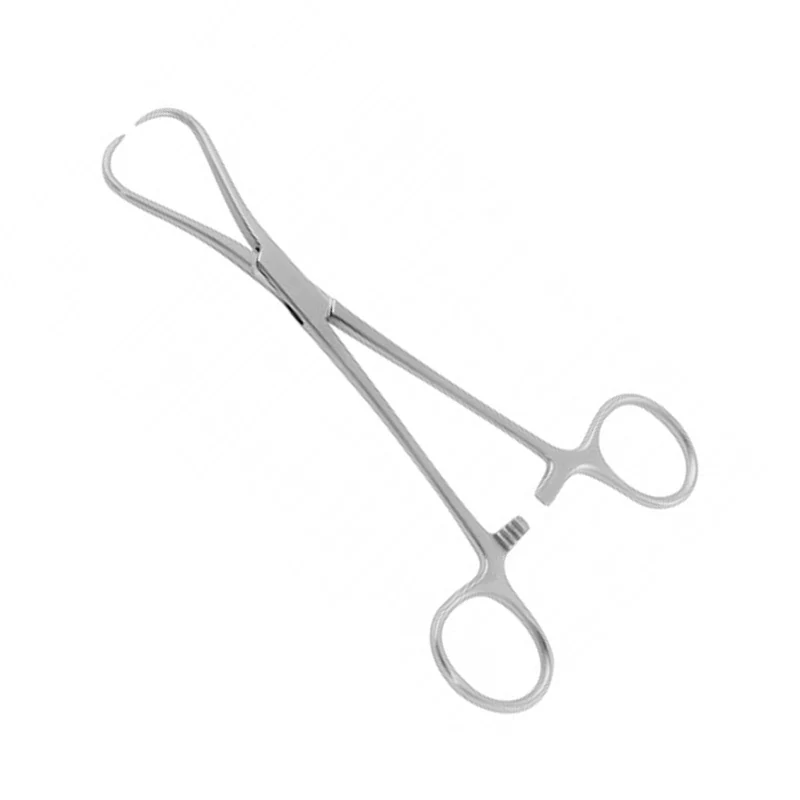
People with IUDs well know this pain. The doctor hooked into my cervix with this device while I coughed – this is supposed to be the pain management part. A cough. The sensation is commonly described as a pinch. NO. I suspect the nurse was a trainee or at least new to the office. She fumbled for things and had to go searching for others. More than once I thought I would need to stop the procedure for fear of passing out from pain. It was only after, as I looked up things I heard Dr. W and the nurse discussing, that I realized they had to cauterize my cervix because it wouldn’t stop bleeding once they removed the tenaculum. No wonder they had to put pads down on the floor before I could stand up. I felt sick, violated, and medically gaslit for quite a while after.
About a week and a half later, on the day of the solar eclipse (I’m an Aquarius – you get it, astrology nerds), I received my biopsy results via MyChart. Dr. W left me a voicemail and MyChart message the following morning: “Your EAB (endometrial aspiration biopsy) results are positive. Your pathology results demonstrate an abnormal thickening of your uterine lining and the suggestion of a form of uterine cancer. The next step is a consultation with a gyn oncologist for evaluation and surgical planning.”
Awesome! Thanks for that very compassionate delivery of potentially terrifying medical information! I honestly, maybe naively, never anticipated a cancer diagnosis. My actual diagnosis was atypical endometrial hyperplasia. I had never heard of this, nor had anyone else I talked to about it. It is a build-up of endometrial tissue, typically due to too much estrogen and not enough progesterone.
She provided three references, one a woman. Mt. Sinai informed me that the doctor I requested to see was on leave. I asked to be scheduled with an available doctor, women only. A week later I found myself at Chelsea Medical Center meeting with gynecological oncologist Dr. C. As she and her staff explained it, we didn’t actually know if cancer was involved yet. You don’t really know until you take everything out and test it. But atypical endometrial hyperplasia has a 30-50% chance of becoming cancerous. Standard course of treatment is hysterectomy. I hadn’t wanted a potential cancer diagnosis but I was definitely ready to get rid of the uterus. I was exhausted with it running and ruining my life. With it would go the cervix and fallopian tubes. The recommendation was that the ovaries go too. Ovarian cancer is hard to diagnose and therefore quite dangerous. Dr. C already had me scheduled for surgery by the time she stepped into the room. I asked to push it back one week from the proposed date to coincide with spring break. She reluctantly agreed.
What followed was a slew of appointments. Bloodwork. Release for surgery from my GP and cardiologist. Both an MRI and CT (these further confirmed likely cancer). Pre-op appointments with the oncology team. The pace of all of this felt unsettling and suggested a seriousness I also hadn’t expected. When cancer is involved, things obviously need to move quickly. But making decisions about ovaries is impossibly difficult.
Five weeks after receiving my biopsy results Dr. C performed a hysterectomy and bilateral salpingo-oophorectomy. Uterus, cervix, fallopian tubes, and ovaries, all gone.
I didn’t get my biopsy results until my first post-op appointment, three weeks later. Stage 1A grade 1. The best possible diagnosis where endometrial cancer is concerned. The myometrial invasion, though, had reached 43%. This means the tumor had grown nearly halfway into the uterine wall. Once it passes 50% the cancer becomes 1B which carries a slightly higher risk of spreading. Surgery had been curative, with no further treatment necessary. I am recovering well and now wading into the morass that is surgical menopause.
It started with a hair cut and here I am nine months later, cancer free and period free, but also experiencing immediate menopause and all that comes with it.
____________________________________________________________________________
As someone who has a long history of reproductive health activism, I thought I was better informed than I actually was. What I’m learning in this process is enlightening and maddening in equal measure. Because I’m an educator and activist through and through, and because some folks have suggested that my setting these experiences to the page could help others, I have decided to write a series on big bad Ursula the uterus. Please let me know if there are specific experiences or issues you would like me to discuss further. More soon ❤
p.s. I’m a doctor but not a medical one. Any medical information I am sharing is my understanding from conversations with my care team and thorough research. It should be accurate. You are welcome to share, gently, your understanding of the medical information I share here.

